Walk any residential block in Terrell Hills and the oaks do the work before you notice them doing it. They arch over Geneseo, over Ivy Lane, over the quiet cul-de-sacs that run behind Alamo Heights ISD's elementary campus, dropping the temperature ten degrees before you've registered the shade. It is the defining physical trait of a city that has spent nearly a century keeping its own police department, its own fire department, and its own zoning rules separate from San Antonio's.
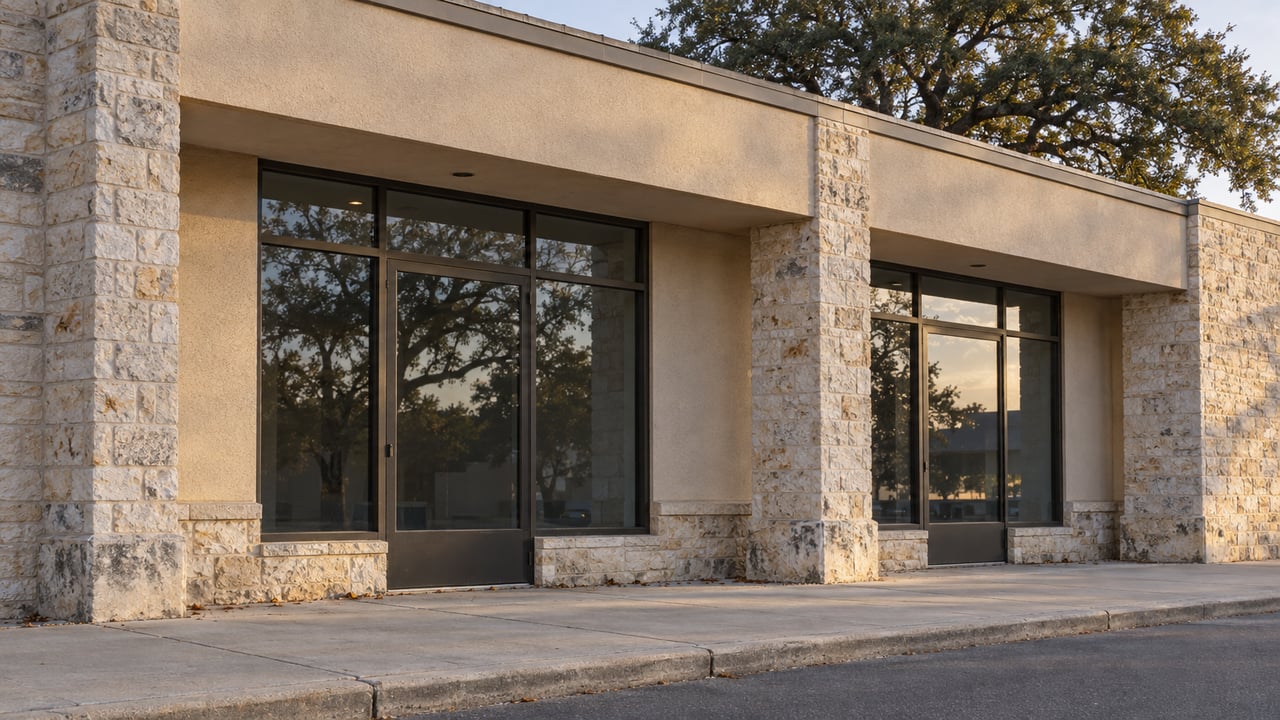
Broadway Street, the short commercial stretch anchored by Cappy's Restaurant and BIRD Bakery, never got that treatment. It has always been the one part of Terrell Hills that reads more like exposed pavement than sheltered neighborhood, a gap that becomes obvious the moment you step off a shaded side street and onto it in July. On April 18, 2026, the Terrell Hills City Council voted unanimously to close that gap, approving a $2.4 million beautification project that adds heritage oak trees, custom lighting, and wider pedestrian walkways along Broadway. Five months later, the project is still working its way through council sessions rather than sitting finished, and that gap between vote and visible change is worth understanding if you use that street at all.
A City That Kept Its Own Streets on Purpose
Terrell Hills was incorporated in 1939 and famously fought off a San Antonio annexation attempt in 1945, a decision that still shapes how the city handles its own infrastructure eight decades later. At 1.6 square miles, it is small enough that a single council vote on one street generates real, visible change across a meaningful share of its public space, and small enough that residents can track a capital project from announcement to completion without needing a city planning department's tracking portal.
That scale cuts both ways. A $2.4 million line item is a serious commitment for a city this size, and it also means execution happens in phases tied to the same budget calendar residents already follow for trash pickup schedules and pool permits. The same run of council sessions that keeps listing a "Broadway streetscape project update" as a standing agenda item also shows the city working through its FY2027 preliminary budget. Watching the project move through subsequent meetings rather than disappearing after the April vote is the clearest sign that heritage oaks along Broadway are a multi-season build, not a spring announcement followed by summer completion.
What the Vote Actually Covers
The April approval names three specific components: pedestrian walkways, heritage oak trees, and custom lighting, all sited along Broadway Street itself. It does not, from what the city has made public, extend to Broadway's continuation into Alamo Heights, where the corridor already carries a denser restaurant scene of its own. Terrell Hills' portion is shorter and quieter, built around a handful of long-standing anchors rather than a strip of newly arrived concepts.
Cappy's Restaurant has served the same stretch since 1977, built on Gulf seafood and steaks in a room that still functions as a neighborhood gathering place rather than a special-occasion destination. BIRD Bakery bakes on site every morning and donates whatever doesn't sell by afternoon to local organizations rather than holding it over as day-old stock. Both have operated for years without the benefit of mature street trees or upgraded lighting out front, which is part of why the new project reads less like decoration and more like a city finally matching its infrastructure to businesses that were already doing the work of drawing people to the block.
Further down Broadway, past the edge of Terrell Hills and into the adjacent stretch, the corridor picks up Paloma Blanca, Paladar Fusion, and Bistr09, a modern French-inspired bistro built around a regularly changing menu. That portion of Broadway already functions as one of San Antonio's more talked-about dining stretches. The distinction matters for anyone trying to picture what's actually changing: the new trees and lighting are landing on the quieter, shorter, Terrell Hills-specific segment, not the busier commercial run that gets most of the restaurant press.
The Green Space That Was Already There
The irony in calling this a beautification project is that Terrell Hills has never lacked for green space. Crestwood Park has long served as the city's family anchor, its playground and open lawn drawing the same families year after year. Geneseo Esplanade does double duty as the site of the annual Fourth of July Parade, when sections of Eldon and Geneseo close off for a morning that starts with a 10 a.m. lineup down Ivy Lane and runs into a block party with free food and entertainment.
None of that civic geography required city council approval to exist. It came from decades of residents treating a wide grass esplanade and a neighborhood park as shared ground. Broadway, by contrast, was purely functional: a place to park, grab a table at Cappy's, pick up a box from BIRD Bakery, and leave. The $2.4 million project is an attempt to give that stretch the same kind of lingering appeal the rest of the city built for itself without a budget line.
The Garden Club Was Already Doing This Work Informally
The Alamo Heights-Terrell Hills Garden Club has operated since 1932 and has belonged to the Garden Club of America since 1978, making it older than most of the infrastructure it now indirectly complements. Its self-guided Home and Garden Tour walks ticket holders through seven private gardens and architecturally notable homes each year, with ticket proceeds benefiting the Terrell Hills Green Spaces Fund.
Read against the Broadway project, the tour makes a case that residents have been informally underwriting the city's green identity for nearly a century, one private garden at a time, while the commercial strip lagged behind. The Broadway Art Walk works the same seam from a different angle, turning the corridor into a pedestrian destination for an afternoon of galleries, studios, artisan vendors, live music, and family activities, all staged on a street that until this year had none of the shade or lighting infrastructure the event's foot traffic might reasonably expect after dark.
What to Watch For Between Now and Next Spring
If the pattern holds, and if council continues treating the Broadway update as a recurring agenda item rather than a closed file, the most likely sequence is a fall or winter construction window tied to the FY2027 budget cycle, with the heritage oaks themselves going in during a planting season suited to their survival rather than a ribbon-cutting deadline. Anyone who walks Broadway regularly for Cappy's, for BIRD Bakery, or for the Art Walk will likely see barricades and staged materials before they see finished canopy, since young oaks take years to close a gap the rest of Terrell Hills spent generations growing.
The more useful marker to track isn't a finish date. It's whether Broadway starts showing up in the same sentence as Geneseo Esplanade and Crestwood Park, as a place residents linger rather than pass through. That's the specific thing this $2.4 million is trying to buy, and it's the reason the project is worth more attention than a single April headline gave it.
Piazza Realty Group keeps a close eye on the small civic decisions that shape daily life in neighborhoods like Terrell Hills, long before they show up anywhere else. If you're curious how a project like this fits into the bigger picture of the area, Piazza Realty Group is always glad to talk it through.